How to Software Engineer in the AI Era
I genuinely believe programming languages are becoming assembler — and I don't mean that metaphorically.
C abstracted assembly. C++ abstracted C. JavaScript abstracted memory management. Each layer let humans think at a higher level. The same leap just happened again — the new abstraction layer is English.
The language I work in now is English. Whether the target is TypeScript, Rust, or Python — source code is a lower-level artifact generated from higher-level intent. I write close to 0% of code by hand. I write documentation and sophisticated prompts.
I wrote a deep dive on this with the full AfterPack case study. Here I want to focus on the practical workflow — what changed and what it means for anyone building software, whether you're writing code, leading a team, or making product decisions.
The Mental Model
Every AI tool boils down to:
Input + Context → LLM → Output
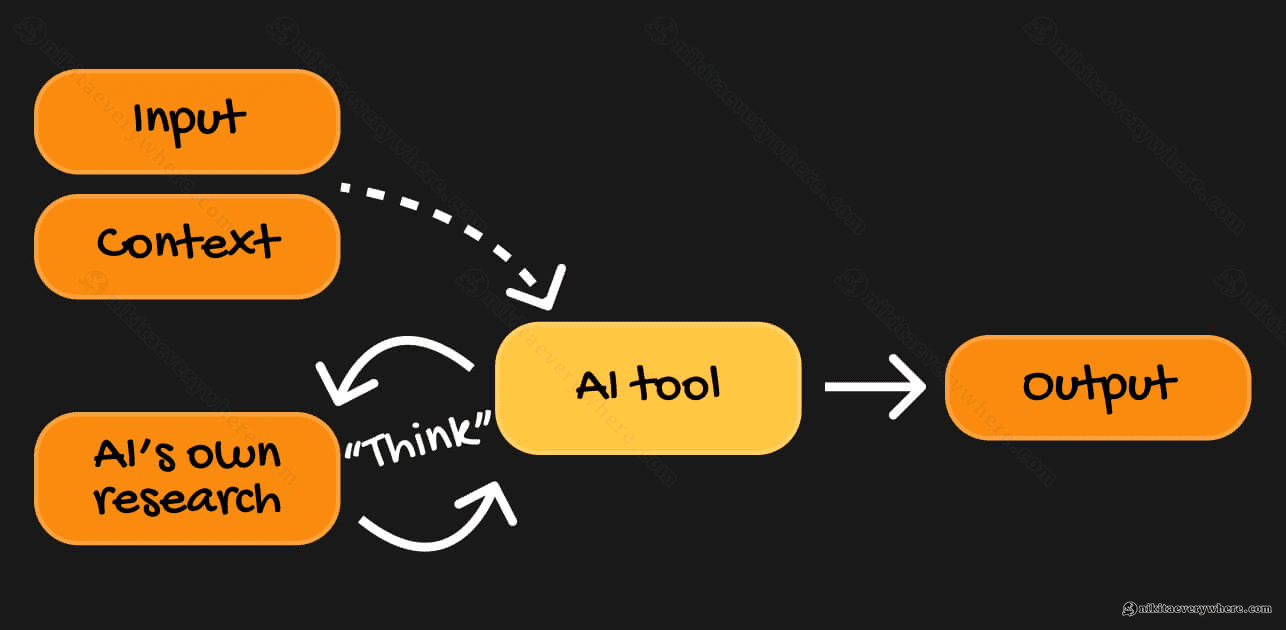
Quality of output is directly proportional to quality of input. I've watched the same LLM give a junior mediocre code and a senior production-ready architecture. The difference was entirely in the context provided — and that applies whether you're prompting for code, system design, or go-to-market strategy.
The Full Lifecycle Changed
If you're only using AI for code autocomplete, you're at maybe 10%.
Ideation and Research: Pressure-test ideas across multiple models (Claude, Gemini, GPT — trained on different data, they spot different blind spots). Competitive landscape analysis. Demand validation with real data. Hours, not weeks.
Planning and Architecture: Where I spend the most time — significantly more than on implementation. Load context: existing architecture, constraints, business requirements. Ask for multiple approaches. Have it argue against its own recommendations.
Planning mode is king. Days in planning, then execution in ~30 minutes. It self-tests. When I come to QA — it mostly just works when planned right.
Design: Skip Figma for many use cases. Give the LLM your existing UI and design system — 15 minutes later, new pages match your patterns. Pro tip: Gemini Pro creates better initial visuals, Claude handles long-term code evolution far better.
Implementation: The fastest part of the cycle. Refactor 100+ files by new design patterns — one-shot in 10 minutes. Previously a week of tedious work.
Testing: AI writes tests, runs them, interprets failures, fixes code. But on real products, you spend most time here — verifying outputs, applying judgment.
Your Brain Goes TikTok
Nobody warned me about this. When AI handles implementation this fast, you become the bottleneck. So you try to keep up — I run 3-5 Claude terminals in parallel. One auditing a codebase, another implementing an API, a third writing product specs. Constantly jumping between contexts, reviewing, catching mistakes.
It's incredibly brain-intensive. Coding used to be more relaxing — hold one idea for 10-20 minutes, type it out, move on. Now you're a rapid context-switcher. TikTok was training us for this all along.
The Real Bottleneck: Human Synchronization
Your role becomes judge, architect, quality controller. But the deeper bottleneck isn't you individually — it's human synchronization. Meetings, handoffs, miscommunication, waiting for approvals. When execution takes 30 minutes, spending 3 days aligning on requirements is the dominant cost.
Who thrives:
- Solo builders shipping entire products alone
- Small teams with clear ownership and less meetings
- Senior generalists who own entire feature areas — PM, QA, architect, engineer in one
One person carries what previously required a team. For larger organizations, each person's blast radius is dramatically larger than two years ago.
The AfterPack Story
I'm building AfterPack — a Rust-based JavaScript obfuscator. Three weeks on core architecture, not a single line of Rust.
- Documentation first. 20+ spec files. Different AI agents on different parts of the spec — just careful system design.
- JavaScript prototyping. Prototyped obfuscation transforms in JS. Multiple iterations. Agents tried to break the prototypes and suggested improvements.
- Adversarial testing. Claude Code running overnight: "keep iterating until a fresh Claude instance can't deobfuscate the output."
Production Rust — a language I'd barely touched. My language is English. I focus on architecture, data structures, algorithms. The previous generation of JS obfuscators took 2-3 years. I'm shipping something more advanced in a fraction of that time. I experience the same compression with DataUnlocker — years of work, now condensable into months solo.
What Actually Matters
- Context is everything. Write documentation before anything. What you want, why, constraints, what "good" looks like.
- Start in planning mode. Multiple approaches. Model argues against itself. Prototype in simpler language first.
- Use multiple models. Claude, Gemini, GPT — different training, different perspectives. Critical for planning.
- Own the architecture. AI implements whatever you describe. Your job is describing the right thing. That won't be automated anytime soon.
Where to Start
- New to software: AI assistant + plain English. You'll learn from watching it reason.
- Not using AI yet: build your next feature entirely AI-assisted.
- Already using AI daily: better documentation, more planning mode, focus on context quality.
- Leading a team: biggest gains are in reducing coordination overhead, not individual speed. Rethink whether every meeting is still necessary when execution is this fast.
Originally published on nikitaeverywhere.com